On filling the emptiness
Lady at Sam's Club sample table offering Atkin's Diet Snack Bars: "We have Dark Chocolate Decadence, Peanut Butter Crisp, Cinnamon Bun, Caramel Chew..."
Large Woman waiting in line to try them: "Oh my gawd! Which one is the most filling!?!"
On revenge minus motivation
Neighbor explaining what he'd like to do to the dude who ditched his pregnant sister a week before she was due to give birth:"I'd kill that son of a bitch...if I didn't have to go find him."
On naming our baby daughter
Helpful mother of April's co-worker: "You can even make a girl's name out of a guy's name. You just take a name and add a different ending What's your daddy's name?"
April: "Carroll."
Helpful mother: "How about Carolnette? That's pretty!"
On saving money on your electric bill
Electric Company Field Service Technician: "Sir, what's with the insulated box you seem to have built around your electric meter and the heat lamp you have rigged up facing the meter?"
Creative old man: "Well I noticed my 'letric meter runs too fast when it gets cold outside, so Imma tryin' to keep it nice and warm!"
On aging and losing one's vision
Patient's grandaughter: "Granny can't see so good anymore; she's got them Cadillacs in her eyes!"
On Google Voice's continued inability to understand a southern accent
Customer leaving a message to see if we have eggs for sale: "Jon, we's calling to see if you got the AIDSs yet...Give us a call back if you got AIDs to sell.
Thursday, March 24, 2011

Tuesday, March 15, 2011
Ides of March

chipping wood with April's dad

Clyde and Bad Bird share a moment

Clyde wants to play catch wearing one of April's old shirts
Sunday, March 6, 2011
Bad Bird

say a prayer for the ruler of the roost
It rained hard from Friday night until late Sunday afternoon. A pounding, heavy rain that the earth greedily drank up until it was soaked full and muddy. April asked me Friday night if we were still going to try and chip the huge woodpile, something about the moisture affecting the gears in the chipper and whether or not wet wood would chip properly. Earlier in the week she had expressed concern that our unborn daughter's ears might be harmed by the high decibels from chipping wood for 6 hours. To this husband's trained ear, these comments sounded like I might be doing a good deal of chipping by myself this year. No matter, I assured her, a few sprinkles couldn't stop us from transforming the big pile of limbs and sticks into mulch. As we laid to rest that night and I set our alarm for 7am Saturday morning, I secretly cursed the wood for making me get up early a 6th time this week. Way too early on Saturday morning, we made a pit stop at Hardee's for their breakfast platter which came with a fluffy biscuit, a big gulp sized cup of sausage gravy, a pittance of eggs and disappointingly, a single slice of bacon. A dude behind us was berating his chubby little daughter for not putting a lid on her breakfast soda and finding fault with her choice of booths. The combination of his asshattery and the lack of bacon made my desire to punch him in the face nearly irresistible. The rain was falling harder as we got in my truck and headed over to Valley Rentals. I recognized the traffic cone orange Bandit XL woodchipper we had rented last year sitting in the parking lot, just waiting to dig its massive mechanical jaws into our stack of sticks. Not another soul was in the parking lot which is unusual at a place that rents manly machinery on a Saturday morning in Caldwell County. The guy at the counter looked amazed that anyone had bothered showing up, reservations or not. He asked if we were sure we wanted to rent the Bandit since the rain tends to affect the gears in the chipping apparatus and wet wood doesn't chip properly anyways. April 1, Jon 0.
I had other things I wanted to get done, so we swung by Lowe's to get some grass seed and a spreader. When we got back home and I read the fine print on the 40lb bag of fescue seed more carefully; I realized the current 40 degree temperature was a bit lower than the 60-80 degree range it said was optimal for germination. Still not discouraged enough to do what a sensible man would have done in the downpour, start a fire and curl up with a book on the couch; I loaded more of the crap the previous residents of this house had left in the basement into my truck and made another trip to the dump.
The rain showed no sign of letting up Sunday morning and my plans for a productive weekend were melting away like the chicken poop on our stoop. We made smoothies with frozen fruit and yogurt for milady, vanilla ice cream for me. I had brought our Roomba robotic vacuum out of storage on Saturday and plugged it in to recharge. Now, I was ready to suck up the tumbleweeds of shed dog hair rolling around the house and for the free entertainment that watching a robot vacuum tormenting our dogs would provide. Rainy days bring out the best in me. After the Roomba depleted his batteries and returned to its dock to recharge, I made an attempt to bake a loaf of whole wheat sourdough bread which ended up more like a dense dark brown brick of fiber despite the copious amounts of gluten I added. By late in the afternoon, I thought I saw the sun trying to break through the clouds and felt like I should let the dogs and the chickens out to enjoy what glorious muddy freedom the waning weekend could offer. Just before sunset, I heard a terrible squawking outside, grabbed the .22 Ruger and went to investigate. A quick headcount came up one short of our current flock of 12 birds, and I knew right away who it was. Our huge, ornery rooster: Bad Bird.
When he was a chick and later a cockerel, Bad Bird was known by a different name. I called him Little Wing; both because he was so much smaller than all the girls and in honor of one of my favorite Hendrix songs. One time he went missing overnight and I remember praying so hard that a snake or owl had not gotten him. After worrying me sick and using up any favors I might have accrued with the guy upstairs; Little Wing emerged from underneath the chicken coop unscathed and hungry. He never was much into being held but I scooped him up and cradled him tight. I felt a wave of relief wash over me as I gave thanks, that sickness and worry just washed away. As he grew older, he soon towered over the hens and was spending most of his time pecking at their necks and trying to make chicken babies by standing on their backs and ruffling his feathers. I don't think he ever really worked out the mechanics of chicken mating, but it was not due to a lack of effort on his part. At some point he started to turn ornery and began chasing April around the farm flapping his wings and trying to leap on her back. I guess he still respected my authority somewhat since he wasn't trying that stuff on me or maybe he just didn't find me attractive. It got so bad April started refusing to refill the water in the chicken coop and she carried a big stick with her anytime she was outside with Bad Bird on the loose. She told me she could see Bad Bird giving her the stink eye whether we were outside pruning trees, inside doing the dishes or just reading on the porch. I though she was crazy at first, but I did start to notice that wherever she went Bad Bird would follow. At a respectful distance if I was around, at stalker like proximity if I was too far away to be a clear and present danger to him. One day, when I was taking out the trash, I felt a stabbing pain in the back of my calf. It was Bad Bird making his move to usurp my position as top cock. A hastily aimed Sam's Club sized bottle of laundry detergent soon solved his delusions of grandeur but I knew I had to do something before things really got out of hand. Google led me to some strategies for getting inside the mind of the chicken which mostly involved doling out large quantities of chicken treats to keep the rooster distracted from attacking you. April's strategy of walking softly and carrying a big stick seemed to be working out pretty well for her, a few lovetaps from her staff of protection had reduced Bad Bird's desire to stand on her back. But that crazed look in his eyes has never gone away. He reminds me of Cobra Commander, bent on world domination yet destined for disappointment.
I found an explosion of white feathers that trailed off into the woods and felt the familiar sickness in my gut. The birds had only been out of the coop for an hour or so, the dogs were supposed to be guarding the flock, but I knew I had failed them once again. I followed the trail of Bad Bird's white and green plumage deeper and deeper into the woods. My slippers sucked in the mud and thorns and brambles grasped and tore at my pajama pants. Clyde found him laying in a heap; taking shallow, ragged breaths. I had the gun and my first thought was to put him down, to end his suffering. I gathered him up in my arms and carried him back towards the house. April was in the shower and the bathroom full of humid steam. I told her something had gotten to Big Bird as I sat down on the toilet cradling his bulk in his arms. I started to pick the muddy clumps of leaves out of his feathers and watched him gasping for air through his gaping beak. I was amazed to find no blood or large wounds. I prayed silently that he wouldn't die from whatever fiend had drug him so deep into the dark woods. Night was falling and I knew I was lucky to have found him before the darkness had hidden him away until morning. I doubt he would have lasted that long in the cold in his condition. April was out of the shower now, drying off and watching her nemesis cautiously, with a tender look in her eyes. I stroked his neck, trying to warm him and willing his heart to slow its racing pace. His eyes were clear and open, his stare nearly reptilian. Something told me to set him down and see if he could stand on his own. He settled, rose slowly into position and dropped a massive chicken gift on the edge of our bathroom rug. I cleaned up his mess, saw him take a few tentative steps and gathered him back into my arms. He looked much better than when I had found him in the woods. I decided to carry him back out to the coop so that he might live or die in good company; surrounded by his harem of hens. I checked on him in the morning and he looked about the same, still shaky on his feet. When I got home from work and let the girls out for their twilight free-range forage, he stayed huddled in a corner of the coop. I tried taking him outside to join the hens but he was having none of that. He has strength enough to hop back into the coop and return to his corner, settling back into an awkward heap. I brought him some fresh water which he greedily guzzled down, though he wouldn't eat a bite of the wheat bread. Bad Bird is usually a big fan of my baked goods. It was getting really cold and I decided to move him to the other side of the coop and set him up in his own space in a steel water trough with fresh wood shavings and a heat lamp. Tuesday morning he looked about the same but I noticed he had eaten some of the food I had left him. By that evening, he was back to looking sturdy on his feet and a lot more of the chicken feed was gone so I returned him to the other side of the coop. We prayed for him before dinner and I will again before I fall asleep. They say you should never name a chicken. Especially a rooster with a bad attitude who doesn't even know how to make me some more chickens. I guess seeing the vulnerable side of anything so ornery is bound to help you come to a new understanding of it. Just like with Clyde the blue heeler, it's funny how the Bad ones do seem to find a special place in your heart.
Sunday, February 27, 2011
winter's end

sunrise over hibriten mountain

Otto, Goldie the hen & I in front of the woodpile we will chip in a few weeks
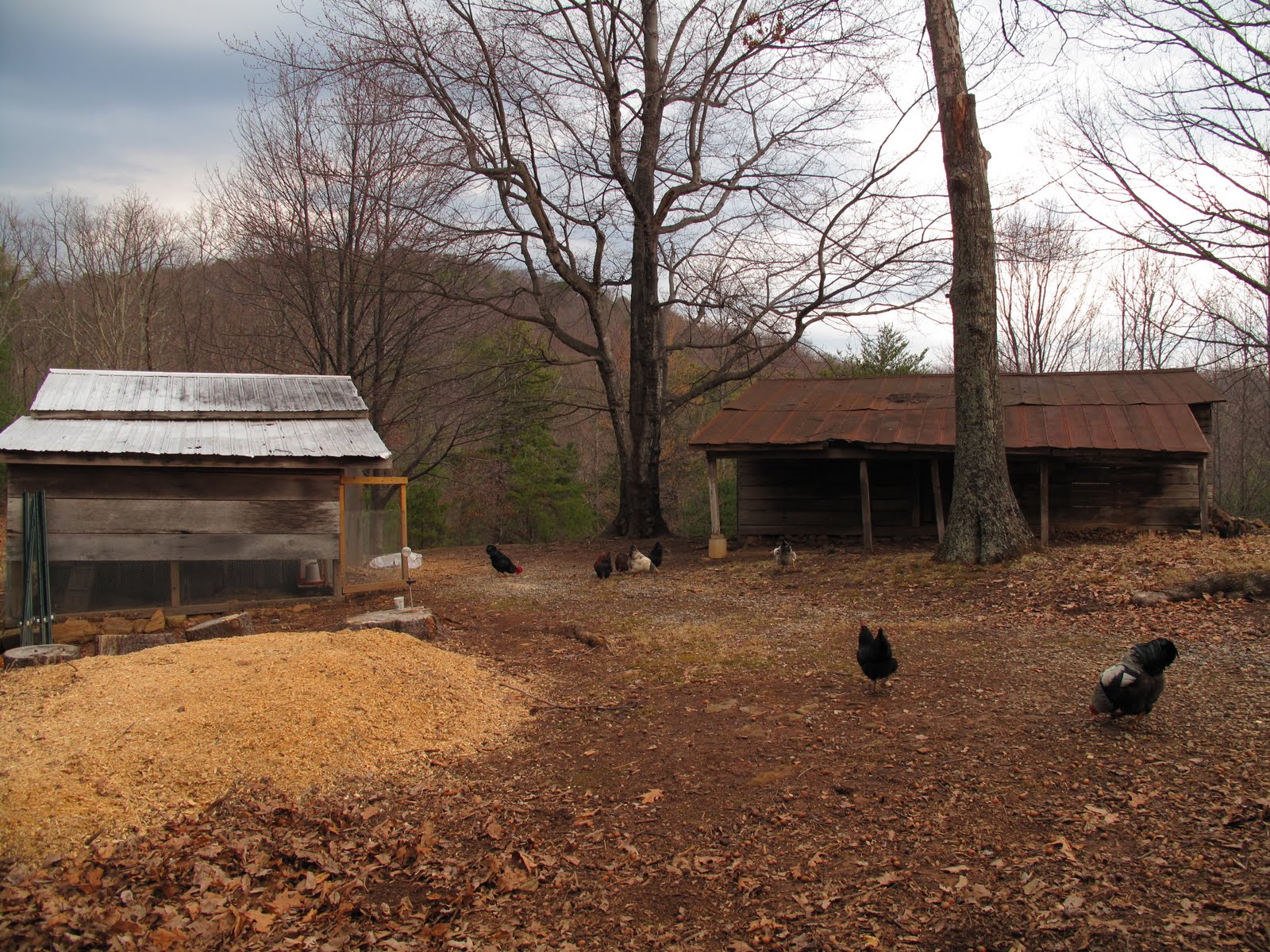
just before a February afternoon rainshower

first hints of green in our freshly pruned apple orchard
Sunday, February 20, 2011
the strange case of the disapearing weekend
If it supposedly flies when you're having fun, I think time moves even faster when you're trying to get things done. I had lofty ambitions of productivity this weekend and achieved a small portion of what I intended to. Sitting here on a chilly Sunday evening, watching twilight fade behind bare trees and little lights glowing in the distant valley, I feel good. Friday, another hen was lost to a hungry hawk and April was kind enough to wait until I was driving home before breaking the news. Losing a lady chicken is always tough no matter how many times it has happened before. We have been lucky the past few weeks with our flock spending the work week confined to the coop and then having a few glorious days of freedom from Friday through Sunday. I'm not sure who between us looks forward to the weekend more. If I was a betting man, I would say the chickens since they get to peck around for bugs and tender shoots instead of pruning fruit trees or repairing faucets in their leisure time. When I got home Friday evening, I went to the garage for a shovel and pitchfork and then walked over to the murder scene. Hawks, much like zombies, seem to have a taste for brains because I have yet to find one of my chicken's heads still attached when they get attacked by those flighted zombie devil birds. April came out and told me the story while I dug a grave in the compost pile for our black australorp. Until we are able to get our chain link fence aviary built behind our chicken coop, we will continue to test our luck as Friday through Sunday free-rangers, at the mercy of the Hawk posse. Saturday morning came later than I had planned for, we threw on some dump appropriate duds and loaded the pickup with refuse before making the bi-weekly journey to the local "convenience center" on Dragstrip Road. I unloaded our crud into the dumpsters and sorted our recyclables into metal, glass and plastic while April watched an Asian couple try to decide if an old couch was worth rescuing from a certain doom. Afterwards, we brunched on delicious BBQ at Hannah's before reloading the truck with chicken feed, pine shavings and a large metal trough for the chicks we have coming in early April. Final stop was Lowe's where we picked up a new faucet and the stuff you need to install one. We lingered amongst the kitchen cabinets, tile flooring, showers and bathtubs awhile, dreaming. One the ride home, April announced that she would install the new faucet all by herself. I was foolishly about to offer my assistance but my curiosity about potentially having a wonderous Mrs. Fix-It available at my disposal got the best of me so I kept my mouth shut. Besides, I had planned to shovel out a year's worth of chicken deuce, decomposing pine shavings and fine particulate dust out of the chicken coop and prepare it for our new arrivals. I got a N95 respirator from April to keep the stuff I was stirring up out of my lungs and got down to business. I was about halfway through shoveling chicken crap and wood chips into a wheelbarrow and dumping it into the compost pile when I saw my lovely wife approaching. She informed that the faucet install was going swimmingly save for a massive crack in the PVC pipe that she had just discovered. In man speak, that translates to: "I just cracked the PVC pipe to the faucet." I was slightly worried until she mentioned that she had shut off that water main in the basement which moved my concern-o-meter up a few notches and I followed her inside to see what the situation was. In one of the few instances I can remember where things weren't actually as bad as I had imagined, I saw that the problem was really that the dude who built our house had decided to bond all the PVC pipe straight into the faucet without using any of those convenient supply hoses that can be easily removed. The crack in the pipe was really the least of our troubles we were going to have to cut the line anyways and install a straight valve before we could install a supply line that would fit the new faucet. Actually, I knew none of this at the time besides that we needed a PVC pipe cutter and some sort of adapter for the 1/2 inch line to connect a supply line to. My wife, the plumbing genius, returned to Lowe's to spend more money to fix a problem we really didn't need to fix in the first place. By the time she was back, I had finished shoveling out the coop and had the chickens put up for the night. I returned to my wife and her faucet nemesis inside covered in a fine dust of shaving and chicken poo and crawled under the sink to cut the lines with the pipe cutter she had acquired. That part of the operation went smoothly and we were ready to pull off the old faucet when we realized the previous installer had actually cemented the plastic nut holding the faucet to the sink to the metal nipple. After maybe an hour and a half of trying tin snips, hacksaw, reciprocating saw, pliers and elbow grease we finally got it off and the sink pulled out. The rest of the install went smoothly, as I followed orders like a monkey being directed by a plumbing puppet master. The bloody knuckles and PVC shavings in my eyes were nothing compared to the satisfaction of turning on the shiny new faucet for the first time and hearing the air clear the lines before gushing smoothly out in a triumphant flow. Sunday morning I had a strong hankering for some apple granola and made a beeline for the kitchen. April joined me as I munched happily while making up one of my famous lists laying out the tasks of the day. She asked me why I never cross anything off these lists, instead just adding the things not done to a newer, longer list. I did not have a satisfactory answer so I told her to mind her own beeswax. We ended up finishing pruning the entire bottom orchard and making the pile of wood to be chipped even more enormous. I had planned on taking some pictures to accompany this post but the sun was on the way down and I was already beat. So that's what it was, another weekend gone, a little more done and lots more still left on the list...God willing, we'll get most of it done by next winter.
Tuesday, February 8, 2011
Thawing out
I have been in full on cave bear hibernation mode this winter and loving it. When I get home from work, I collect eggs and put the chickens up, let the dogs out, put on flannel pants and get a fire going. Then I settle on the couch with my laptop and the first beer of the evening and move as little as possible for the next 4 hours. As a result of this regimen and a day job that isn't exactly physically taxing, I've been getting fat for the first time since middle school. Getting ready in the mornings, I've noticed my pants fitting a little tighter in the waist and my slim cut shirts seem a little more stretched at the buttons. When the weather finally turned mild last weekend for the first time since fall, we wasted no time getting back outside and back to work. April got down to raking the heavy blanket of soggy leaves away from the house, tidied up and trimmed back the rose garden and was happy to see her beehives start to buzz with activity again. I broke out the handsaw and shears and began the epic task of pruning the orchard back into shape. Climbing into the trees like a monkey man, cutting off all the water sprouts and reducing the apple and pear trees to more productive and pickable shapes used muscles that had lain dormant for at least 2 months. We worked side by side with our dogs and chickens happily barking and clucking away under the warm winter sun. While the hens were pecking for bugs and sprouts underneath their favorite oak tree, our mighty white rooster fended off a 2 falcon assault force with a little help from the junior roo. The warning shots from the .22 probably helped a little too. Not a single bird was lost to the forces of evil this fine Superbowl Sunday. We labored until our breath was short, our muscles ached and the sun hung low in the February afternoon sky. April helped me to gather most of the limbs and branches, I had shorn from the first 5 trees to receive their spring haircuts and carry them back to our growing woodpile. After I finish pruning the orchard we will rent some heavy equipment for another wild weekend of woodchipping madness. We also placed this year's order with Johnny's Selected Seeds. This spring we will be adding herb and flower gardens around the house in addition to adding asparagus, new tomato varieties and a much larger selections of greens, lettuce and cabbage to the raised beds. We are moving away from staples like corn and potatoes that we tried growing last year since we cant compete with the prices at Walmart or even the folks bringing them in from South Carolina to the farmers market. With us both working we are trying to refocus our energy on things we love to eat ourselves and that will fetch a little higher dollar if we have surplus to sell. The bees have a year of honey production under their little black and yellow belts and we are expecting the hive to meet much higher sales numbers this year. Clyde and Otto are still spending the majority of their time shedding copious amounts of fur on our couches, barking at imaginary intruders and laying about on the porch waiting to be let back inside. April finally hit upon the solution to stop sofa destruction by barricading the Blue Heeler inside the kitchen with two chairs backed against a stout folding table. The couch may be beyond repair at this point but our chunky cattle dog's campaign of destruction has come to a halt at least temporarily. Today we saw a little more snow and another arctic evening, but as I fall asleep tonight I'll be dreaming of sunshine and the prospect of many more working weekends ahead to work on losing this winter gut.
Sunday, February 6, 2011
To Hell With Farming
Originally printed in American Mercury (November 1937).
I used to be a timid, thin man. I never got on very well in the city. When I was talking to people, they tended to drift away, or they turned to someone else and said: "Having nice weather, aren't we?" I didn't see in my job any of the heroic aspects my superiors were always glorying in, so probably I wasn't very good at it.
For a while I turned to poetry and wrote a beauty about the song of the hermit thrush, but everybody in the office thought it was la-di-da. I didn't like noise or smoke or subways or hurrying or playing golf or getting drunk Saturday nights, so I began to think there must be something wrong.
I went to a psychoanalyst who told me I disliked everything too much. For this I took a great dislike to the psychoanalyst. I refused to pay five bucks for this new hate, and the psychoanalyst ended by hating me. So I decided to "get away from it all" — to move from the city to the great quiet of the country and simplify my life. I bought a farm far up in New England, and I bought a cow, too. I had always wanted to own a cow and watch it cropping my grass while I dreamed the days away.
At five o'clock the first afternoon I went to the pasture to milk my cow among the daisies and buttercups. The flies seemed to bother her a lot, and she wrapped her tail around my face three times with a loud crack. A good deal of milk went up my sleeves and over my knees, but there remained an additional two gallons in the pail.
When I had achieved this result, the cow placed one hoof in the bucket, turned it over, and walked thoughtfully to a patch of clover.
The next day I hitched her in the barn for milking, and then she gave two pailsful and I didn't know what to do with it. One of my farmer neighbors suggested I get a pig, make butter of the cream, and raise the pig on the skimmed milk. This idea fit in very well with my simple plan for a simple life. I would be a self-sustaining unit in the good, old-fashioned way. So I bought a pig. I also bought a cream separator, a churn and a cream can, a butter worker, and some wooden paddles, besides numerous buckets.
I discovered promptly that making butter was a terrific job. The neighbors, however, told me a man couldn't make butter the way a woman could, and that I ought to have a wife. There was nothing else to do: I got myself a wife right off.
She said she'd have to have some ice to cool the cream if she was going to make butter, and that we really should have running water, because washing the separator was a great chore. Consequently I laid in a pipe to a spring and blasted tons of rocks out of the ditch in order to lower the pipe so that it wouldn't freeze in winter. When my hired dynamiter had blasted two windows out of the house, I decided the ditch was deep enough. While painting the new window sash and puttying the new panes, I decided it was wonderful what a man's hands can teach him if he's not too far sunk in the decadence of civilization. I felt there was a certain nobility in what I was doing, learning by trial and error, learning as the cavemen learned, as the race has always learned.
The water ran fine for two weeks and then the spring dried up. So I put in a pump from a spring lower down, but the water was hard as a brick and plugged the pipes with lime. Nevertheless, I soon learned to take the pipes apart and knock out the lime deposits, and my wife said it was wonderful how handy I was getting to be. She didn't know the half of it. I had torn the pump apart four times in the first week.
Sifting some dirt to recapture a little brass screw that I had dropped, I couldn't help reflecting that the ramifications of a cow's influence were extensive indeed. My red-and-white bovine had already led me to the matrimonial altar, forced me to undertake a course in blasting, taught me something of geology, made me a pig-raiser, a glazier, a plumber, and now a combination garage mechanic and miner.
About this time, I found I'd have to get some hay into the barn to winter my cow. This necessitated a hand rake, grindstone, whetstone, and scythe, and also brought a bill of $20 for man-with-team, the loss of some ten gallons of sweat, and another bill of $10 for beer. Meanwhile the garden was growing full of witch grass, and the woodchucks wouldn't eat any of it, though they did raze the peas and beans, and the cutworms leveled the cabbages. I set to work in the garden and was very busy. The summer passed and I never once spent a minute watching my cow crop the grass while I dreamed the days away.
This pastime, however, was undertaken vicariously for me by a number of former friends from the city who came and lolled in the shade and told me what an idyllic life I had and how they envied me. They knew a lot about birds and flowers, and they told me what a beautiful view there was from the mountaintop yonder. I would have liked to find out more from them about the country around my home, only I had to put a new roof on the barn because after the rain had leaked in on my hay, the cow wouldn't eat it.
Winter was almost upon me by the time I had finished the roof and built my new icehouse. I had always loved to watch the seasons fade into one another and see the leaves turn red, and the first snow, and all the rest of it. But now I felt like a man running through a railway tunnel with a locomotive behind him. I had to cut wood like mad in order to keep warm. I also had to buy a new ax, a saw, some wedges, a sledge, mittens, boots, and a pair of snowshoes. I already had so much gear piled in the woodshed there wasn't room for more, and so I had to keep my snowshoes under the bed. This made my wife mad. But I said I was damned if I was going to build a snowshoe house, and that was that.
It wasn't long, of course, before I slashed my foot with the new ax. While I was resting in bed, studying the Department of Agriculture pamphlets on how to raise bees, caponize roosters, install cement floors in stables, and build henhouses, I decided it was silly to work day and night for the sake of one cow. I decided I would buy some more cows, now that I had a new separator and pump and icehouse and cream can and so many buckets. After all, two cows can live as cheaply as one.
So, when spring came, I bought six cows and seven pigs. I soon found, however, that my pasture wasn't big enough for seven cows and that I'd have to clear some of the scrub. And the fences were down everywhere. I had to go into the woods and cut 500 cedar fence-posts. And then I spent the spring dodging loops of barbed wire which chased me up and down and coiled round me like the tentacles of an octopus.
It was now apparent that I'd have to plant a lot of crops to feed my seven cows over the winter, and this entailed buying a team, a plow, harrows, a wagon, harness, corn planter, cultivator, and various other implements. It also entailed feeding and watering the horses twice a day for the next 50 years, or however long they lived, or however long I lived.
That summer, even more city people came to see our farm; it seemed we were a realization of their dream, a crystallization of their longing for a place in the country. My wife was busy with the canning and the garden and the butter-making and the house and the pullets, and God knows I had enough to do without sitting and listening to the city people tell me what an idyllic life I had and how they envied me. But I didn't notice any of them grabbing a hayfork and pitching in.
When my crops began to grow I realized I'd have to have an addition on the barn for storing them, so I set to work on that. By the time it was finished I had collected so many tools I had to build a tool shed to put them in. My hogs were big and it was time to butcher them. I decided I'd buy some more tools and go ahead and learn to butcher. Hadn't I already become something of a carpenter, plumber, blacksmith, painter, lumberjack, tinsmith, mechanic, and veterinary? Well, it was a bloody job, but I had learned not to think, which is very useful.
My cows commenced having calves. I couldn't bring myself to kill them, so I had to feed them, which was worse. I fought rats, thawed frozen pipes, fixed machinery, cut ice, cut wood, and performed prodigies of midwifery for my cows. Occasionally I recalled with awe a vision of myself sitting on a boarding-house porch with nothing to do, thinking life was a vacuum.
And thus I sank into a bog of work from which I emerged but rarely for 15 minutes late Sunday afternoons, just before chores. I kept it up for five years, and then I began figuring and found I was losing $500 a year on an investment of $8,000, coupled with fifteen hours of toil per day. I felt that I'd come to the end of my rope.
That was the year I didn't get the storm windows on until March, and in April my wife wanted them off again. I said, "To hell with it!" I said, "Pitch a flat-iron through them if you want air." And I put on my best suit and took the train for the city.
When I got to the city it smote me in the face, and I knew, right away that I didn't like it any better than before. I walked right past the psychoanalyst's door, however, without going in. Yet soon I felt so lonely I thought I'd look in at the office and see the boys. Maybe I'd ask for a job again. But they wouldn't want me. My face was like cordovan leather, and I had calluses on my palms like warts.
It began at the reception desk when Miss McEvoy came out and shook hands. "Why, where have you been?" she cried. "I'd hardly know you. You're positively bronzed."
"I've been on a farm," I said. "I'm a farmer now."
"A farmer! Oh, you always were lucky. And here I am at the same old desk. Well, I suppose you want to see Mr. Stewart. He'll be so pleased."
In the president's office, Mr. Stewart said: "Why, how you've grown, how well you look! A farmer, eh? Master of your own time, down to the city for a spree. Y'know, I've always wanted to break away and have a little farm in the country."
He shook his head sadly. "And a cow maybe — but I guess I haven't the courage. Say, Blinks will want to see you." And he pushed the buzzer.
Blinks came in. "Boy, put 'er there!" he said. I didn't think I was squeezing very hard, but Blinks howled. "For heaven's sake don't crush my knuckles. Stewart, the fellow doesn't realize his strength. Take a look at this mitt, look at those calluses."
Mr. Stewart ran a fingertip over them, awestruck.
Soon there were three more men in the office. One of them put a hand on my arm and asked shyly, "Let me feel your muscle." I flexed my arm and the chap's eyes gleamed with envy. "Hard as nails," he said, and they all nodded their heads.
"You chop down big trees, I suppose," said Mr. Stewart.
"Pretty big," I said. "I cut my foot with the ax once when I was new at it."
Finally, there wasn't any way out of it but for me to take off my shoe and show them the scar, and roll up my trouser-leg and exhibit the two white marks the horse's caulks had left. This was so much of a climax that I thought I'd better leave before the spell was broken. They all wanted to take me out to dinner, but I told them to come up to the farm in August instead for a big blow-out, "golden bantam picked just twenty minutes before, clotted cream, wild berries, home-cured ham". And then I tore myself away, feeling very airy.
In August the office workers came out to the farm and I met them at the station with a load of hay. I let them fish the brook and pick berries and chop down all the trees they wanted to. I also showed them the actual horse that had kicked me.
The following winter they came again, bringing more pals with them to see the snow. And so, as time went on, my farm became a Mecca for businessmen whom I allowed (at $6 a day) to play around the woods with sharp hatchets, provided they remembered that once in the house they mustn't whittle furniture. The chairman of the board of the Amalgamated Gas Corporation was the worst one for whittling, but he paid extra for the privilege, so we let him go ahead.
More and more came the next summer and I hired two maids for my wife, and I didn't do a thing except play with my paying guests and teach them to shoot woodchucks and make wooden whistles. Most of them were pretty well behaved and spent their time jumping in the hay and practicing milking, hiding in the corn, going about naked, and teaching a cow to kick.
Now that I have two hired men and don't personally delve in the fruitful earth for simple fare, or cut my fuel in the winter woods, or scythe the lower meadow in summer dawns while the dew is on, or roam the hills at sunset looking for the cows, or feed the horses, I have become quite famous as a genuine nature man and woods dweller.
And last year, I installed an oil burner, a chauffeur with station wagon, a home electrical plant, and three new bathrooms to take care of my paying admirers who come on reverent pilgrimages. You should hear them saying wistfully, "Oh, how I'd like to break away and live the simple life like you do."
terra meiga
"Love of nature and appreciation of the beauties of the landscape were foreign to the rural population. The inhabitants of the cities brought them to the countryside."
- Ludwig von Mises
Wednesday, January 26, 2011


Sunday, January 23, 2011
Death from Above - Part Deux
It's been a cold and uneventful week up here on Cardinal Ridge. I am all for uneventful weeks, it gives one time to notice the things you normally are too busy to appreciate. This week I appreciated the way dense fog glows orange during sunrise on my way to work and rose pink sunsets over the Blue Ridge on crisp winter evenings on my way home. I appreciated the way a full moon's light fills a cloudless night sky and I enjoyed my first bubble bath in quite some time. The wife and I watched a few movies that made us laugh, made a roaring fire every night and we ate our Saturday breakfast at Donna's cafe where I finished her livermush.

foggy sunrise
It was a good week spoiled only by returning home from grocery shopping to find a peregrine falcon tearing one of my hens to shreds in the garage. That and Clyde ripping open the couch like a transplant surgeon and then transplanting the foam stuffing to both the floor and his stomach. In between mouthfuls of cushion, he also decided to pee on the sofa for good measure. It reminded me of that skit on the Dave Chapelle show where Rick James stretches out on Eddie Murphy's new white couch with filthy boots on and proceeds to grind them all over the upholstery. Always nice to come home to a little destruction on a Thursday evening.
I tried to punish Clyde by holding his face in the stuffing and telling him not to do it again, but when God was distributing the ability to recognize actions and their consequences; Blue Heelers were probably eating his couch. We tried dousing the sofa with a bitter cherry spray that is supposed to deter this type of behavior but apparently it makes the cushions taste like cherry pie because there wasn't much left of the upper lefthand side of the couch when we got home that day. Other helpful internet suggestions have included wrapping the couch in barbed wire or getting another dog to distract the destructive dog. Since we already have Otto here to police Clyde, we figure the German Shepherd is just getting back at us for bringing Clyde home in the first place. I can see him sitting silently, smugly, staring at Clyde destroying the couch and thinking to himself, "I told the humans it was a bad idea to get another dog, but they did not listen to Otto." We are still trying to decide whether locking Clyde in the basement while we are at work or reupholstering the couch with Kevlar would be more effective at this point.
There isn't much I can do about the Peregrine falcon problem given that they are an endangered species. Without leaves on the trees to afford the chickens any cover from their laser guided talons and lacking any sort of roof over their outdoor run; the ladies have been back under coop arrest most of the week. On Fridays, Saturdays and Sundays; we leave Clyde out with the birds and he patrols the perimeter by running in circles and barking maniacally. I'm not sure how effective this is at stopping falcons but we haven't lost any more chickens in the last few days to foxes or raccoons. It's been interesting for me to see the difference in egg production when the girls get out of the coop to free range versus being shut indoors. I usually get about 6 eggs per day during the week and 10-11 on the weekends when they get their chance for some sunshine and fresh air. I am hopeful that building a new larger outdoor run with a mesh or wire roof will let them get enough freedom to keep production high while also keeping them safe from the plethora of predators out to get them here on Cardinal Ridge.
While I tap out these few words and occasionally glance up at the NFL conference championships on this chilly Sunday afternoon; I find myself hoping that I might be blessed enough to enjoy another uneventful week.

foggy sunrise
It was a good week spoiled only by returning home from grocery shopping to find a peregrine falcon tearing one of my hens to shreds in the garage. That and Clyde ripping open the couch like a transplant surgeon and then transplanting the foam stuffing to both the floor and his stomach. In between mouthfuls of cushion, he also decided to pee on the sofa for good measure. It reminded me of that skit on the Dave Chapelle show where Rick James stretches out on Eddie Murphy's new white couch with filthy boots on and proceeds to grind them all over the upholstery. Always nice to come home to a little destruction on a Thursday evening.
I tried to punish Clyde by holding his face in the stuffing and telling him not to do it again, but when God was distributing the ability to recognize actions and their consequences; Blue Heelers were probably eating his couch. We tried dousing the sofa with a bitter cherry spray that is supposed to deter this type of behavior but apparently it makes the cushions taste like cherry pie because there wasn't much left of the upper lefthand side of the couch when we got home that day. Other helpful internet suggestions have included wrapping the couch in barbed wire or getting another dog to distract the destructive dog. Since we already have Otto here to police Clyde, we figure the German Shepherd is just getting back at us for bringing Clyde home in the first place. I can see him sitting silently, smugly, staring at Clyde destroying the couch and thinking to himself, "I told the humans it was a bad idea to get another dog, but they did not listen to Otto." We are still trying to decide whether locking Clyde in the basement while we are at work or reupholstering the couch with Kevlar would be more effective at this point.
There isn't much I can do about the Peregrine falcon problem given that they are an endangered species. Without leaves on the trees to afford the chickens any cover from their laser guided talons and lacking any sort of roof over their outdoor run; the ladies have been back under coop arrest most of the week. On Fridays, Saturdays and Sundays; we leave Clyde out with the birds and he patrols the perimeter by running in circles and barking maniacally. I'm not sure how effective this is at stopping falcons but we haven't lost any more chickens in the last few days to foxes or raccoons. It's been interesting for me to see the difference in egg production when the girls get out of the coop to free range versus being shut indoors. I usually get about 6 eggs per day during the week and 10-11 on the weekends when they get their chance for some sunshine and fresh air. I am hopeful that building a new larger outdoor run with a mesh or wire roof will let them get enough freedom to keep production high while also keeping them safe from the plethora of predators out to get them here on Cardinal Ridge.
While I tap out these few words and occasionally glance up at the NFL conference championships on this chilly Sunday afternoon; I find myself hoping that I might be blessed enough to enjoy another uneventful week.
Subscribe to:
Posts (Atom)